
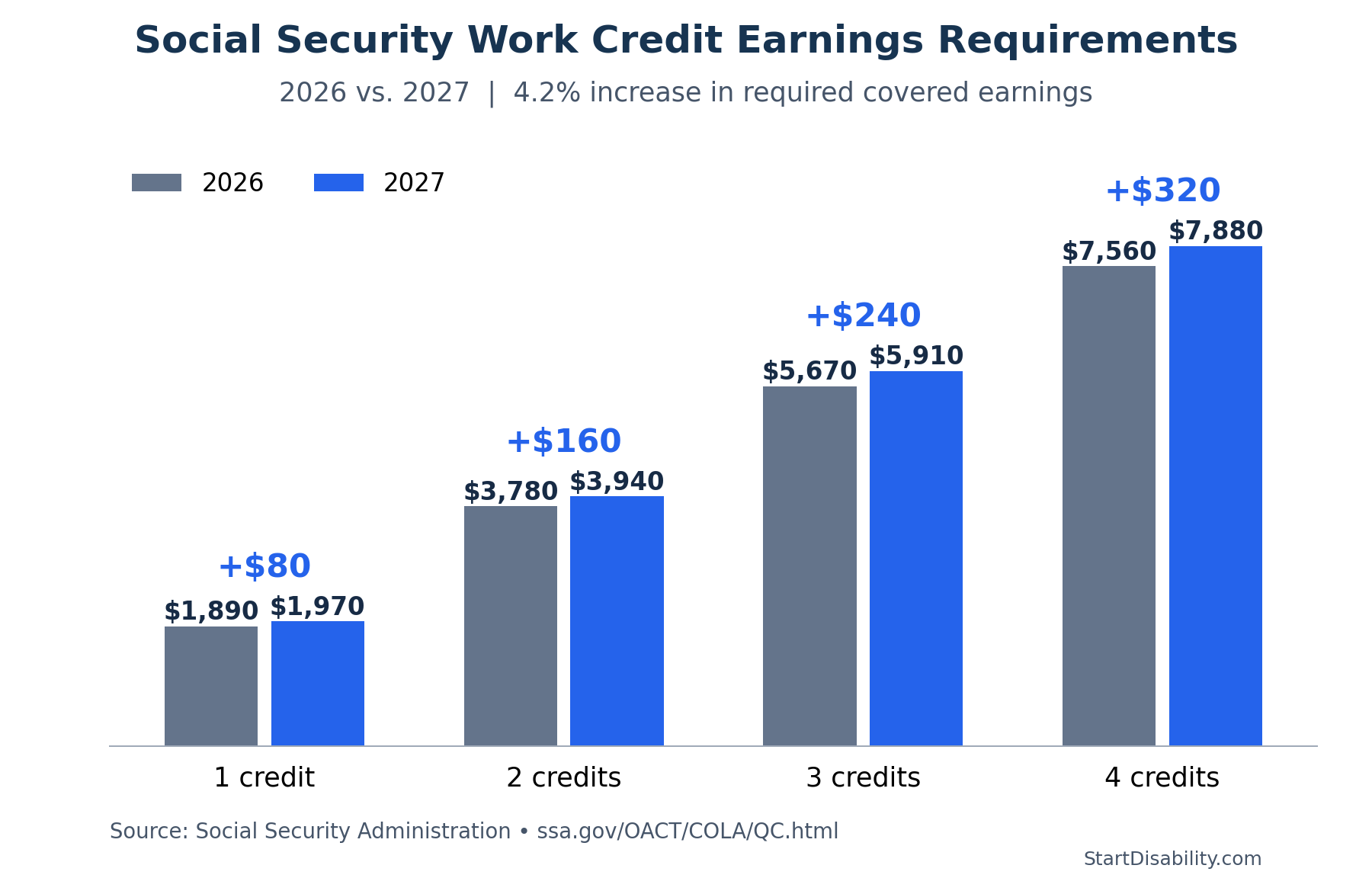
Beginning January 1, 2027, the amount you must earn to receive a Social Security work credit will increase from $1,890 to $1,970.
Although Social Security adjusts its work credit earnings requirements based on national average wage growth, the federal minimum wage has remained unchanged since July 2009. The national average wage index includes earnings across the wage spectrum, including highly paid corporate executives, and does not necessarily reflect the wage growth experienced by lower-income workers.
This growing disparity may present an additional challenge for lower-wage workers whose medical conditions limit their ability to work.
2027 Social Security Work Credit Requirements
Workers will need an additional $80 in covered earnings to earn one Social Security work credit in 2027 and an additional $320 to earn the maximum of four credits.
Earnings required to earn Social Security work credits:
1 credit: $1,890 → $1,970 (increase of $80)
2 credits: $3,780 → $3,940 (increase of $160)
3 credits: $5,670 → $5,910 (increase of $240)
4 credits: $7,560 → $7,880 (increase of $320)
Covered earnings generally include wages and qualifying net self-employment income subject to Social Security taxes.
The increase does not affect work credits you have already earned.
Work Credit Earnings Requirements Have Increased 80.7% Since 2009
On July 24, 2009, the federal minimum wage increased to $7.25 per hour. At that time, workers needed $4,360 in annual covered earnings to earn four Social Security work credits.
In 2027, workers will need $7,880 to earn those same four credits — an increase of 80.7%.
Meanwhile, the federal minimum wage has remained unchanged.
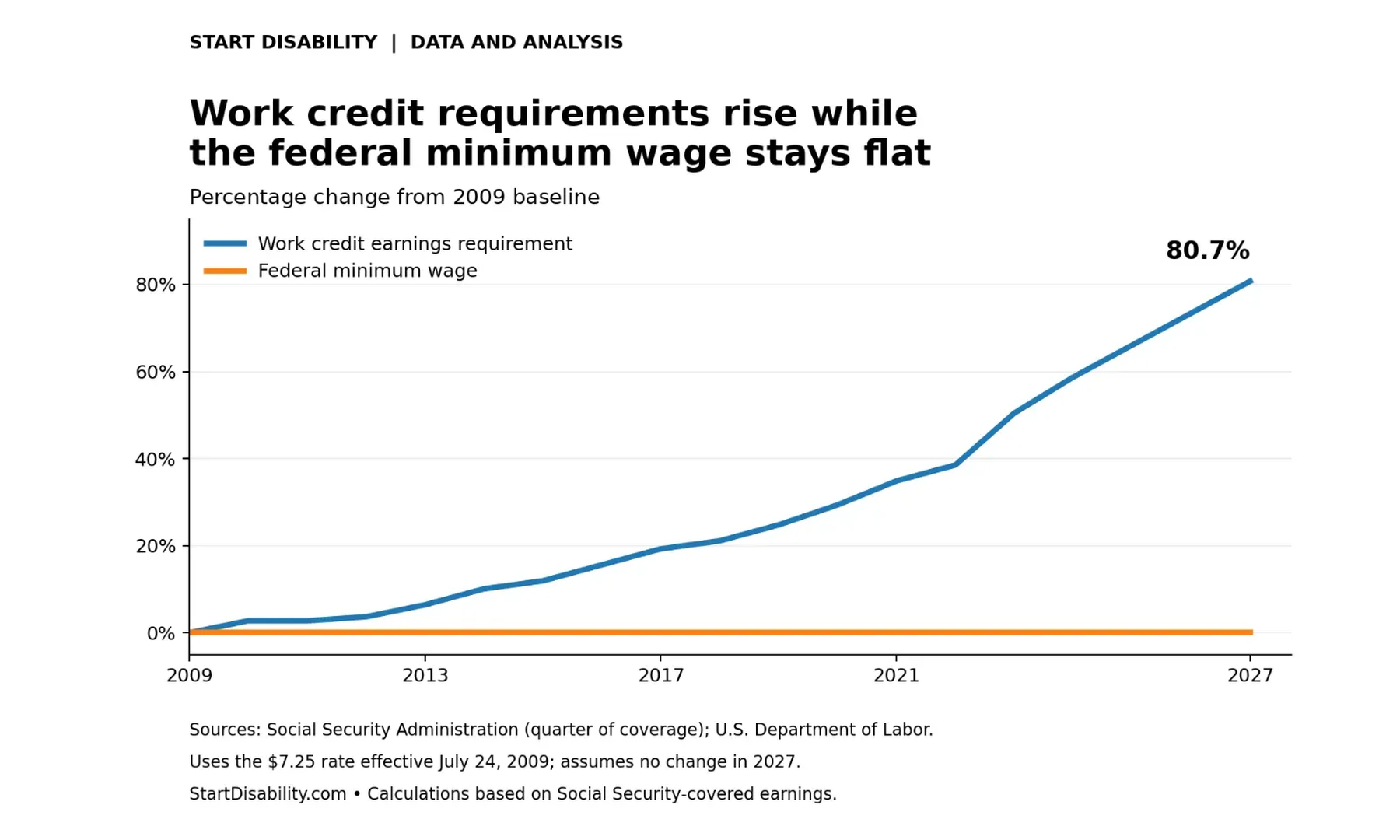
Although many states have established higher minimum wages, workers whose wages have not increased must work more hours to earn the same number of Social Security work credits.
Minimum-Wage Workers Will Need to Work More Hours
At an hourly wage of $7.25, earning four Social Security work credits in 2027 will require approximately 1,087 hours of work, compared with 601 hours using the 2009 earnings requirement and the federal minimum wage established in July of that year.
That's approximately 486 additional hours of work — the equivalent of nearly 61 additional eight-hour workdays.
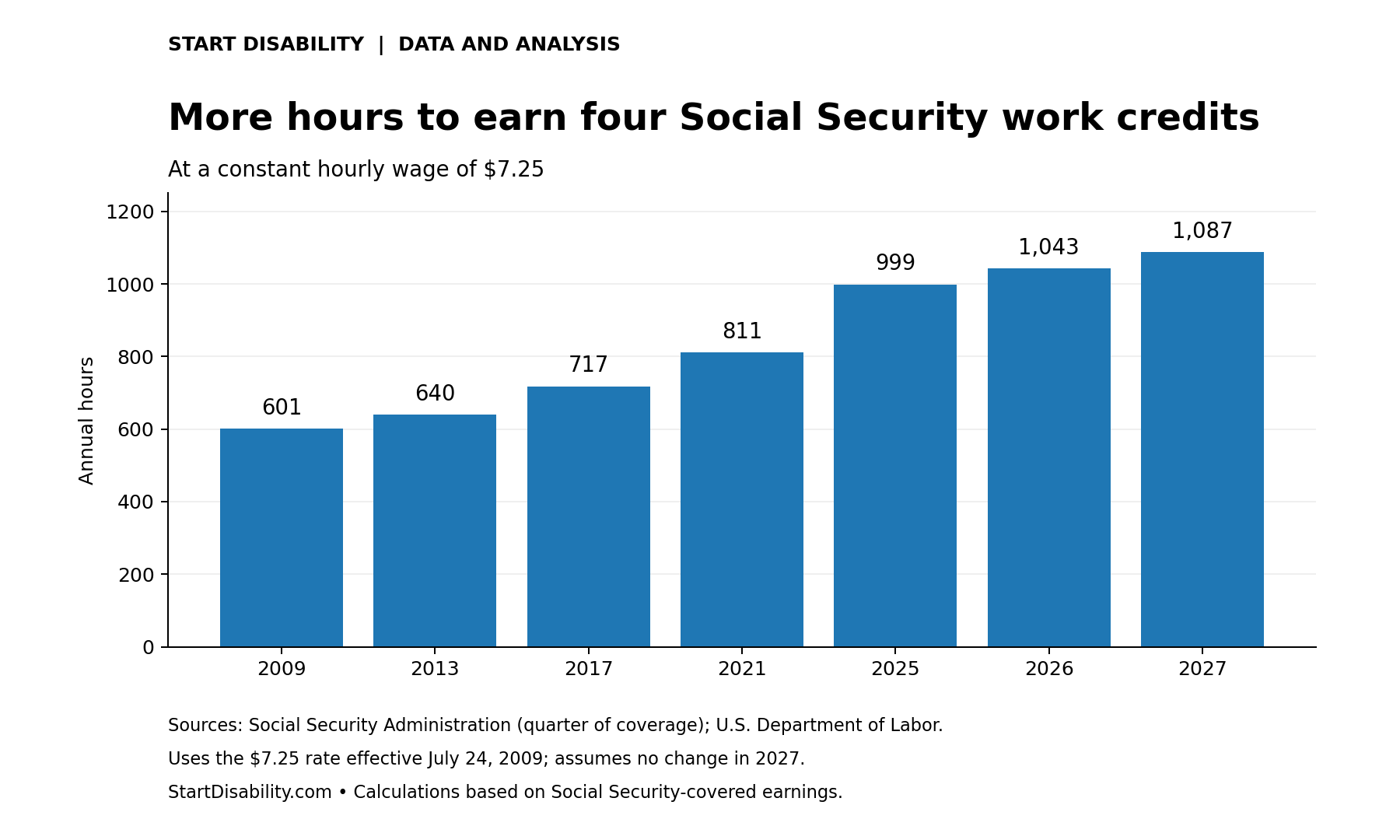
For workers whose medical conditions are already limiting their working hours, earning additional work credits may become increasingly challenging when their wages do not keep pace with rising earnings requirements.
What Does the 2027 Increase Mean for SSDI Eligibility?
Eligibility for Social Security Disability Insurance (SSDI) depends, in part, on how many work credits you have earned and, in most cases, how recently you earned them.The 2027 increase does not change the number of credits required to qualify for SSDI. It changes only the earnings required to receive new credits.
Even though previously earned work credits are not lost because of this increase, your disability insurance coverage can expire if you no longer meet Social Security's insured-status requirements.If a medical condition is affecting your ability to work, understanding your work credit history and Date Last Insured (DLI) can be particularly important.
You can review your earnings history and benefit estimates through your my Social Security account at https://www.ssa.gov/myaccount/.
Summary
Social Security work credit earnings requirements will increase by approximately 4.2% in 2027. Over the longer term, those requirements have increased substantially while the federal minimum wage has remained unchanged.
Understanding these changes can help you better assess your work credit history and SSDI eligibility.
Frequently Asked Questions
Will I lose my previously earned work credits in 2027?
No. The increased earnings requirement applies to new credits earned in 2027. However, previously earned credits may no longer satisfy the recent-work requirements for SSDI.
Do I need 40 work credits to qualify for SSDI in 2027?
Not necessarily. The number of work credits required depends on factors including your age when your disability began. Younger workers may qualify with substantially fewer credits.
Do I have to work all four quarters of 2027 to earn four credits?
No. Social Security generally calculates work credits using your total covered earnings for the calendar year. You can earn all four credits without working during every calendar quarter.
References
Social Security Administration. (n.d.). Quarter of coverage. https://www.ssa.gov/oact/cola/QC.html
Social Security Administration. (n.d.). National average wage index. https://www.ssa.gov/oact/cola/AWI.html
U.S. Department of Labor. (n.d.). History of federal minimum wage rates under the Fair Labor Standards Act, 1938–2009. https://www.dol.gov/agencies/whd/minimum-wage/history/chart
U.S. Department of Labor. (n.d.). Questions and answers about the minimum wage. https://www.dol.gov/agencies/whd/minimum-wage/faq
20 C.F.R. § 404.130. How we determine disability insured status. https://www.ssa.gov/OP_Home/cfr20/404/404-0130.htm
20 C.F.R. § 404.143. How we credit quarters of coverage for calendar years after 1977. https://www.ssa.gov/OP_Home/cfr20/404/404-0143.htm
Disclaimer & AI Ethical Statement
Disclaimer: This article is for informational purposes only and does not constitute medical or legal advice. Consult with a qualified healthcare provider for any medical concerns or questions. Consult with a licensed attorney for legal advice.
AI Ethical Statement: This article includes information sourced from government and reputable health websites, reputable academic journals, non-profit organizations, and generated with help from AI. A human author has substantially edited, arranged, and reviewed all content, exercising creative control over the final output. People and machines make mistakes. Please contact us if you see a correction that needs to be made.
